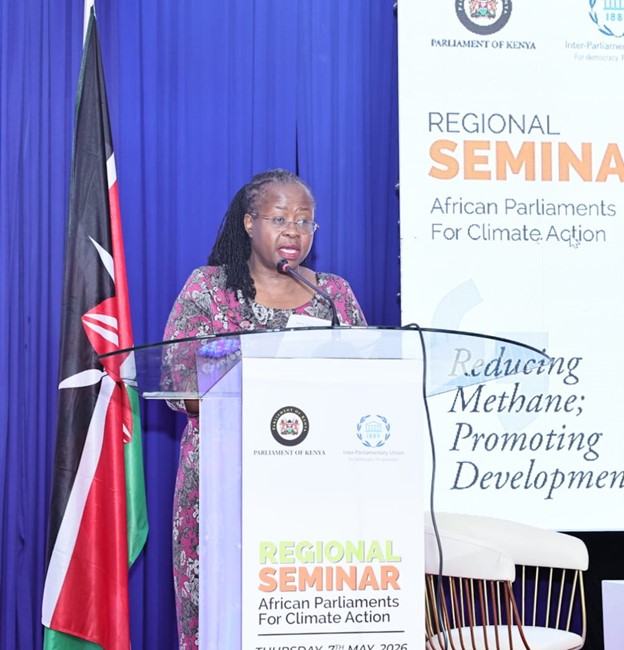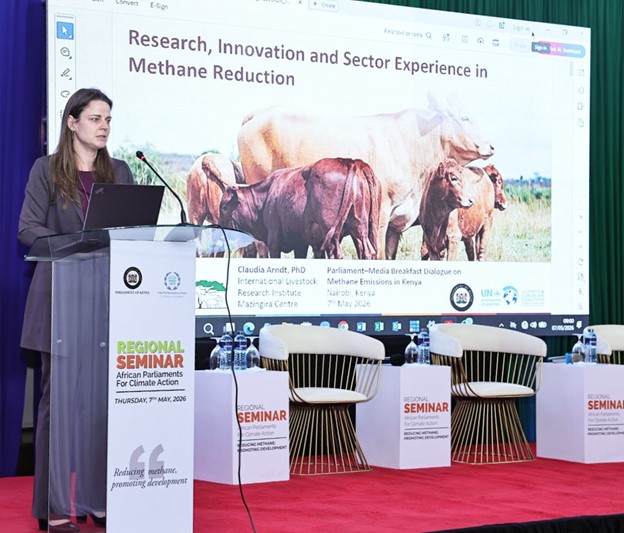
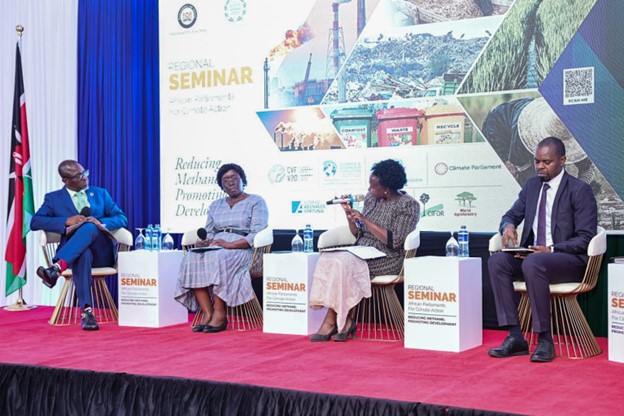
This week, leaders from Parliament, government, media, research institutions, civil society, and the private sector gathered in Nairobi for a timely conversation on methane emissions and climate action in Kenya and Africa
Convened at Parliament Buildings during the Parliament – Media Breakfast Dialogue on Methane Emissions in Kenya, the meeting focused on a growing but often overlooked climate issue: methane – a powerful greenhouse gas linked to agriculture, waste, and energy systems.
While climate discussions often focus on carbon emissions, speakers emphasized that reducing methane could deliver faster climate and public health benefits, especially for countries like Kenya whose economies and communities depend heavily on agriculture and natural resources.
One message stood out clearly throughout the morning:
“Climate action must move beyond technical reports and become a public conversation.”
The dialogue brought together Members of Parliament and Senators, State Departments, journalists, researchers, development partners, and innovators to discuss how Kenya can strengthen policy, improve public awareness, and unlock investment opportunities around methane reduction.
For many participants, the conversation was not just about emissions – it was about livelihoods, food systems, clean cities, public accountability, and the future resilience of communities.
Another powerful takeaway from the meeting was the growing recognition that media and citizens have a critical role to play in climate governance.
“People cannot support what they do not understand.”
As The Ndaragwa Foundation, we were encouraged to see increasing efforts to connect science, policy, and citizens in ways that are practical and inclusive. Climate solutions will only succeed when communities, especially grassroots populations, are informed, engaged, and part of shaping the response.
The meeting also served as a precursor to the upcoming Regional Seminar on African Parliaments for Climate Action, where legislators from across the continent will meet in Nairobi to strengthen parliamentary leadership on climate issues.
For Kenya, this signals an important shift: climate conversations are increasingly moving from global conference rooms into national institutions, local communities, and every day public discourse.
And perhaps that is the biggest takeaway of all – climate action is no longer a distant environmental issue. It is now a governance, development, and citizen issue.